


PVC sandwich panels: properties and applications
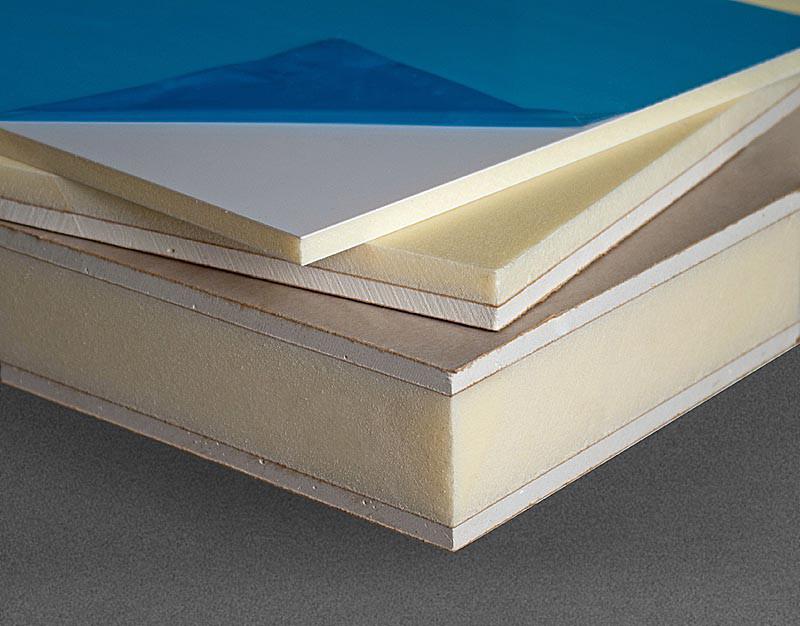
PVC sandwich panel is a three-layer structure: two rigid PVC sheets between which there is insulation (expanded polystyrene, polyurethane foam).
PVC sandwich panels filled with polyurethane foam have the best heat-saving characteristics. Polyurethane foam is the most environmentally friendly material. Residential use is permitted. It has minimal hygroscopicity (the ability to absorb water vapor from the air) and the longest service life.
The foam polystyrene filler is an environmentally friendly material, has low thermal conductivity and low weight (which is very important if the sandwich panels are load-bearing). It is not hygroscopic, does not support the combustion process without a fire source, is a self-extinguishing material. Expanded polystyrene is characterized by high strength, chemical resistance, durability, high thermal insulation properties.
Depending on the climatic conditions and the purpose of the object under construction (reconstructing), one or another type of insulation material is used.
As an outer layer of a plastic sandwich panel, various materials can be used:
- Жесткий ПВХ лист (rigid PVC sheet);
- Вспененный ПВХ лист (foam PVC sheet);
- Laminated plastic (HPL).
For slopes and windows, a simple hard matte or glossy PVC sheet of white color is most often used. Less often panels with PVC foamed sheet are used. The standard format of white PVC panels offered by manufacturers is 3×1.5 m., color 3×1.3 m.
Areas of application of PVC sandwich panels are different:
-
- Finishing of window and door slopes;
- Filling of opaque parts of various plastic structures (partitions, façade elements of balconies, billboards);
- Wall decoration;
- Fully assembled construction.